A well-designed playground involves more than selecting suitable play equipment and installing an appropriate flooring surface. Every part of the space, including its edges, transitions and surrounding boundaries, should be carefully planned to create a functional and organised recreational environment.
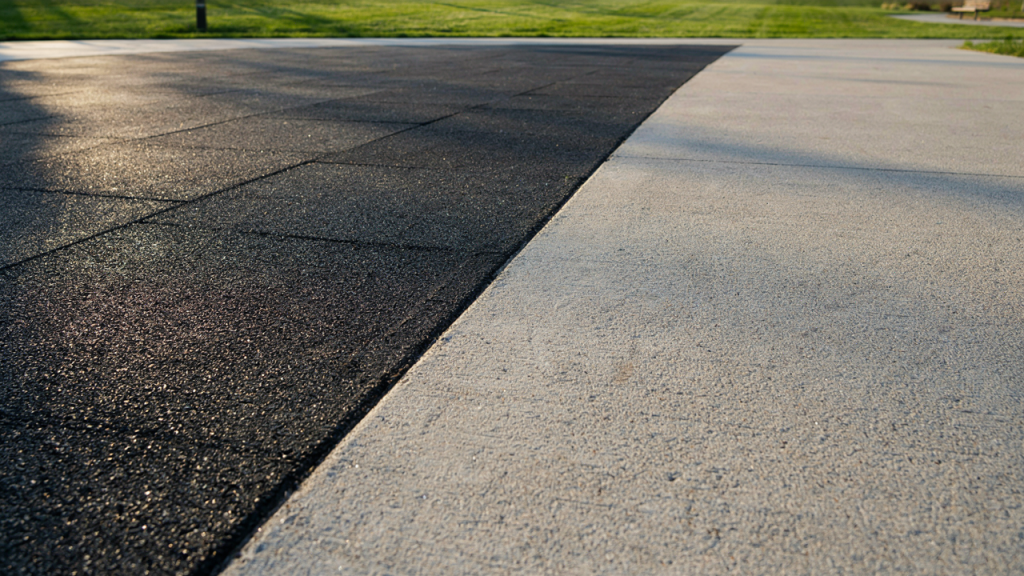
In outdoor playgrounds, flooring edges are particularly important where rubber surfaces meet concrete pathways, landscaped areas, artificial grass or other materials. Poorly planned transitions can create uneven levels, gaps or raised sections that may affect everyday movement and maintenance.
EPDM rubber edges for playgrounds in the UAE can be considered as part of a properly designed playground surfacing system. They help create a more organised transition between different surface materials while complementing the appearance of the main rubber flooring.
For schools, nurseries, residential communities, hotels and public recreational spaces, understanding playground edging options can help property owners and facility managers plan more complete playground installations.
What Are EPDM Rubber Edges?
EPDM stands for Ethylene Propylene Diene Monomer, a synthetic rubber material commonly used in outdoor flooring and recreational surfacing applications.
EPDM rubber edges refer to edging or border components designed to finish the boundaries of rubber playground surfaces. Depending on the selected system, these may be manufactured rubber profiles, specially formed rubber borders or other compatible edging solutions.
They are used around playground flooring areas to create defined boundaries and help manage transitions between different surfaces.
The exact design depends on the playground layout, flooring system, installation method and surrounding ground conditions.
Why Are Playground Edges Important?
Playground edging is sometimes overlooked during the initial design stage. However, the boundary of a flooring system can influence its appearance, accessibility, maintenance and long-term performance.
Here are some important reasons to consider suitable edging.
1. Creating Defined Playground Boundaries
Rubber playground flooring may be installed alongside grass, concrete, artificial turf or landscaped areas.
Suitable edging helps establish a clear boundary between these surfaces. It also gives the playground a more organised and professionally finished appearance.
2. Managing Surface Transitions
Different flooring materials may have different thicknesses and installation requirements.
A properly designed transition can help reduce abrupt changes in surface level. This is particularly important around entrances, walkways and frequently used areas.
Edging should be designed to avoid creating raised lips, exposed gaps or trip hazards.
3. Supporting Flooring System Stability
Some playground edging systems are designed to help retain the flooring installation at its boundaries.
However, edging alone cannot compensate for an unstable base or incorrect installation. The complete flooring system must be designed according to the manufacturer’s recommendations and site requirements.
4. Improving the Overall Appearance
Colourful playground flooring is often used to create attractive recreational spaces.
EPDM rubber borders can complement the main flooring design by providing defined edges, contrasting colours or coordinated patterns.
This can help create a consistent appearance across schools, residential developments and public playgrounds.
Common Applications of EPDM Playground Edging
Playground rubber edging can be considered in several recreational environments, depending on the flooring system and site layout.
1. School and Nursery Playgrounds
Schools and nurseries require organised outdoor activity spaces where children can move between play equipment, walking areas and recreational zones.
Suitable edging can help define the boundaries of rubber flooring around slides, swings, climbing structures and other play equipment.
The design should ensure that surface transitions remain suitable for children’s movement.
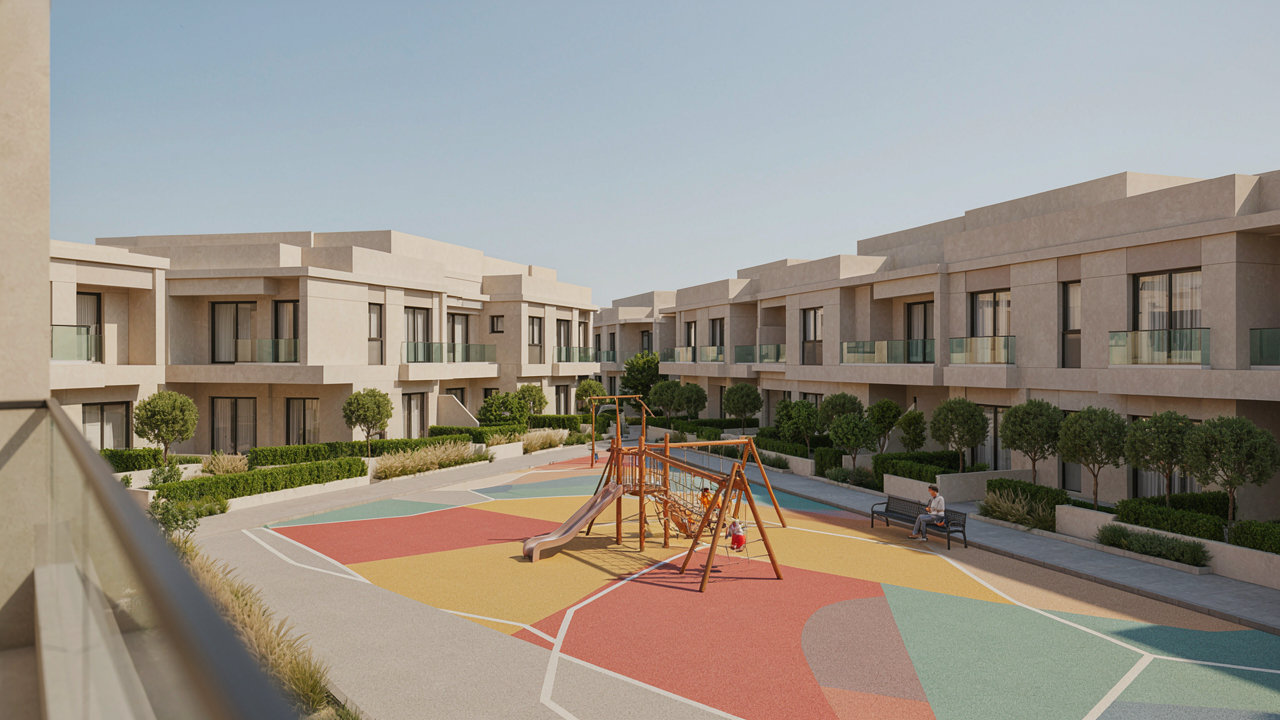
2. Residential Community Play Areas
Modern residential developments often include dedicated playgrounds for children.
These spaces may combine rubber flooring, landscaped sections, walking paths and seating areas.
Playground edging can help separate these areas and create a more organised recreational layout.
3. Public Parks and Recreational Facilities
Public parks frequently include different types of outdoor surfaces within a single playground.
Suitable borders can help define the rubber flooring area and manage the transition between playground surfacing and nearby pathways or landscaped sections.
4. Hotels and Hospitality Properties
Hotels and resorts may develop children’s play zones as part of their outdoor recreational facilities.
In these projects, flooring edges can be coordinated with the overall landscape design, helping create a neat and visually consistent play environment.
Types of Playground Edging Solutions
The appropriate edging option depends on the flooring material, playground design and site conditions.
1. Rubber Edging Profiles
Rubber edging profiles are components designed to finish the boundaries of selected rubber flooring systems.
They may be available in different shapes, dimensions and material specifications.
Before selection, it is important to check whether the profile is compatible with the installed flooring system and suitable for outdoor exposure.
2. EPDM Rubber Border Systems
Some playground projects use rubber border components that coordinate with the main EPDM surface.
These may be selected in contrasting or matching colours to create defined play zones and finished flooring boundaries.
The material specifications and fixing method should be confirmed with the manufacturer or installation provider.
3. Concrete or Metal Restraints with Rubber Flooring
Not every playground requires a rubber edging product.
In some installations, the flooring system may be retained using properly designed concrete or other suitable perimeter restraints.
The selected restraint must be compatible with the playground surface and designed to avoid exposed sharp edges, abrupt level changes or unsafe transitions.
Important Safety Considerations for Playground Edges
The safety of a playground depends on the complete design, not just the flooring material.
When planning EPDM rubber edges in the UAE, the following factors should be considered.
1. Avoiding Trip Hazards
Raised edges, loose sections and uneven transitions can create hazards for children and other playground users.
The edging should be installed at an appropriate level, with smooth and secure connections to the surrounding surfaces.
2. Proper Edge Fixing
Edging components should be installed according to the manufacturer’s instructions.
Depending on the system, this may involve suitable adhesives, mechanical fixing or integration with the flooring installation.
Incorrect fixing can result in movement, separation or deterioration at the boundary.
3. Compatibility with Playground Flooring
The edging material should be compatible with the main playground surface.
For example, an edging system intended for rubber tiles may not be suitable for every poured-in-place EPDM installation.
Always confirm the correct combination before installation.
4. Drainage Around Playground Boundaries
Water should not become trapped around playground flooring edges.
The base, surrounding levels and drainage arrangements should be designed to prevent unwanted water accumulation.
This is particularly relevant for outdoor playgrounds exposed to rainfall and regular cleaning.
5. Impact-Attenuation Requirements
Playground edging should not be treated as a replacement for impact-absorbing surfacing.
Areas beneath and around elevated play equipment must have an appropriate tested safety surface based on the equipment’s critical fall height.
Where relevant, the complete playground surfacing system should be evaluated against applicable impact attenuation requirements, including EN 1177.
The boundary design should not introduce hard or exposed components into areas where children may fall.
How to Choose the Right Playground Rubber Edging
Selecting suitable edging requires an understanding of the playground layout and the flooring system.
Consider the following points before finalising a product.
Understand the existing flooring: Identify whether the playground uses poured-in-place EPDM, rubber tiles or another surface system.
Measure the playground boundaries: Determine the required lengths, corners, curves and transition points.
Check material compatibility: Confirm that the selected edging is suitable for the flooring system and outdoor conditions.
Consider the UAE climate: Check the manufacturer’s information regarding UV resistance, heat exposure and weather suitability.
Plan drainage: Ensure that the edging does not obstruct drainage or create areas where water can collect.
Prioritise safe transitions: Avoid sharp edges, exposed fixings, loose sections and unnecessary changes in surface height.
Follow installation specifications: Use suitable installation methods recommended for the selected edging and flooring products.
EPDM Rubber Edges and Playground Flooring in the UAE
Outdoor playground projects in the UAE require careful material selection because surfaces are exposed to sunlight, high temperatures, dust and changing weather conditions.
When selecting playground rubber edging, facility owners should review the product’s technical specifications and confirm its suitability for the intended outdoor environment.
It is also important to coordinate the edging with the main playground flooring installation. This helps create a consistent surface design and reduces the possibility of incompatible materials or poorly finished boundaries.
For projects involving schools, residential developments, hotels and recreational facilities, playground edging should be considered during the initial planning stage rather than treated as a finishing detail at the end.
Why Professional Playground Flooring Planning Matters
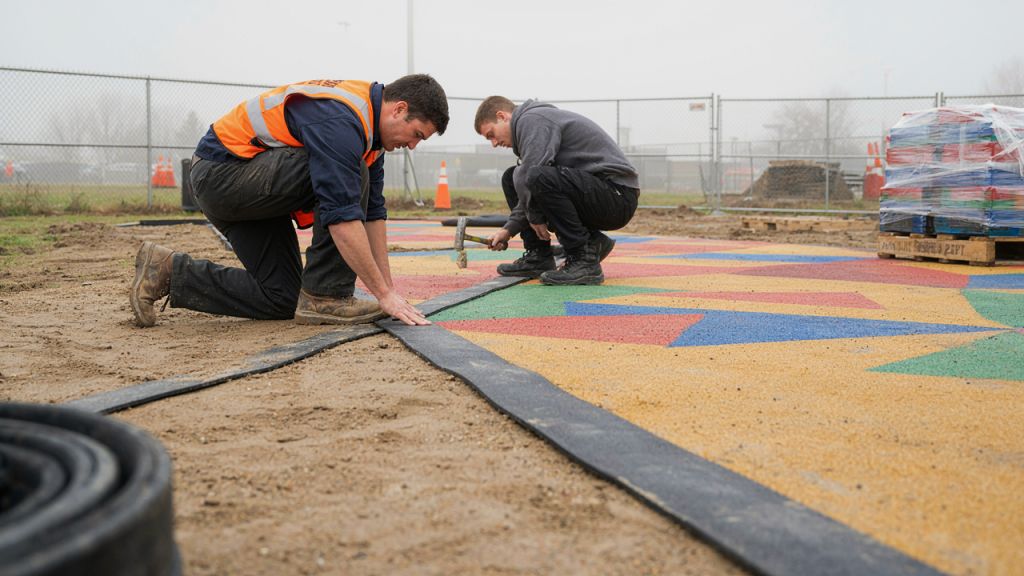
A successful playground installation involves several connected elements, including the flooring material, base preparation, drainage, equipment layout, safety zones and boundary design.
Professional planning helps coordinate these elements according to the project requirements.
Anfield provides sports flooring and recreational facility solutions for different project environments. Choosing appropriate materials and planning the complete installation can help create organised, functional and visually appealing recreational spaces.
Explore sports flooring solutions in the UAE to learn more about flooring applications and available options.
You can also explore specific sports facilities for information about sports and recreational facility solutions.
Conclusion
EPDM rubber edges can form an important part of a well-planned playground flooring installation. They help define surface boundaries, manage transitions and create a more complete appearance when used with compatible rubber flooring systems.
For schools, nurseries, public parks, residential communities and hospitality properties, selecting the right edging requires attention to material compatibility, installation quality, drainage and playground safety.
In the UAE, considering these details during the planning stage can help create more organised and functional outdoor recreational spaces.
Frequently Asked Questions
1. What are EPDM rubber edges used for in playgrounds?
EPDM rubber edges are used to finish or define the boundaries of selected rubber playground flooring systems. They can help create organised transitions between rubber surfaces and surrounding materials.
2. Are rubber edges necessary for every playground?
No. The need for edging depends on the flooring system, site layout and installation design. Some systems use separate edging components, while others use integrated or alternative perimeter restraints.
3. Can EPDM rubber edging be used outdoors in the UAE?
Outdoor use depends on the product formulation and manufacturer specifications. Check its suitability for UV exposure, high temperatures and local site conditions before installation.
4. Do EPDM rubber edges improve playground safety?
Properly designed edging can help manage surface transitions and reduce problems associated with loose or uneven boundaries. However, it does not replace impact-absorbing playground flooring or eliminate all injury risks.
5. Can EPDM rubber edges match the playground flooring colour?
Some rubber edging products are available in different colours. The available options depend on the manufacturer and selected system.
6. How should playground rubber edges be maintained?
Regularly inspect the edges for movement, separation, cracking, exposed fixing components and uneven transitions. Follow the manufacturer’s maintenance instructions and repair damaged sections when necessary.
7. What should be checked before installing playground edging?
Check the existing flooring type, boundary measurements, base condition, drainage, material compatibility, fixing method and required safety clearances before installation.