Choosing the right flooring is an important part of designing or upgrading a gym. The floor needs to handle repeated movement, dropped equipment, heavy foot traffic and different types of workouts while providing a safe and comfortable surface for users.
For gym owners, fitness centres and training facilities in the UAE, flooring selection also needs to consider the local climate, maintenance requirements and the type of activities carried out in the space.
The right sports flooring for gyms in UAE can help create a safer training environment, improve floor durability and support the long-term performance of the facility.
Why Gym Flooring Matters
A gym floor experiences much more activity than a normal commercial floor. People may run, jump, lift weights, perform functional training exercises or use fitness equipment throughout the day.
A suitable floor can help with:
- Impact absorption
- Traction and stability
- Noise reduction
- Equipment protection
- User comfort
- Surface durability
- Easy cleaning and maintenance
Different areas of the same gym may also require different flooring solutions. A weight-training area, cardio zone and group exercise studio do not necessarily have the same flooring requirements.
This is why gym flooring in the UAE should be selected according to the activities, equipment and expected level of use.
Types of Sports Flooring for Gyms
There is no single flooring system that is suitable for every gym. The best option depends on the facility and its intended use.
Rubber Sports Flooring
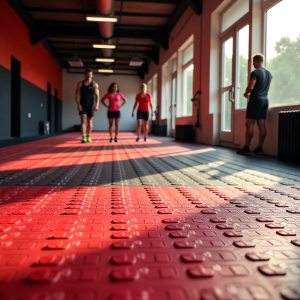
Rubber flooring is commonly considered for gyms because it provides impact resistance and a durable surface for high-use areas.
It can be suitable for:
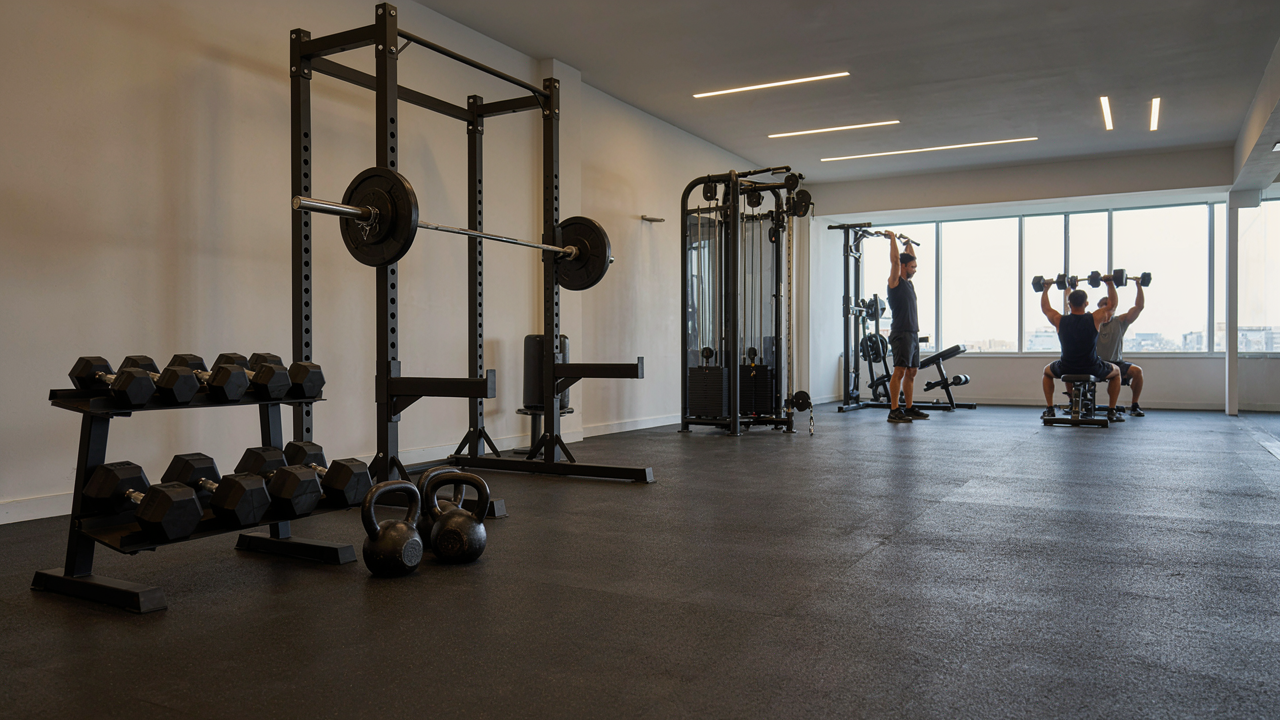
- Weight training areas
- Free-weight zones
- Functional training spaces
- Strength and conditioning areas
- General fitness areas
Rubber surfaces can help protect the underlying floor from equipment impact and provide a stable surface for many types of exercises.
For heavier training environments, the thickness and construction of the rubber flooring should be selected according to the expected loads and activities.
PU Sports Flooring
PU flooring can be considered for fitness spaces where a smooth, durable and professionally finished sports surface is required.
It can be useful in multipurpose training environments and indoor activity areas where surface consistency and easy maintenance are important.
The performance of a PU system depends heavily on proper substrate preparation and professional installation.
For more information, see our guide to PU Sports Flooring Installation UAE.
Wooden Sports Flooring
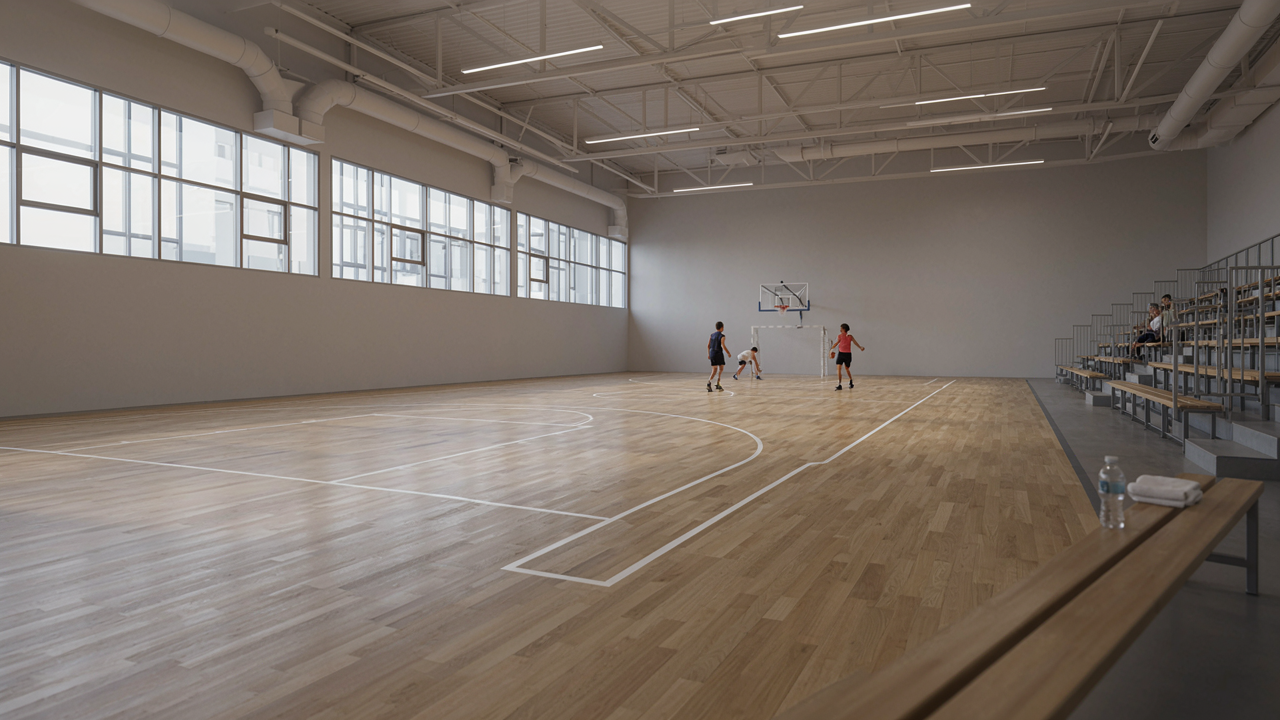
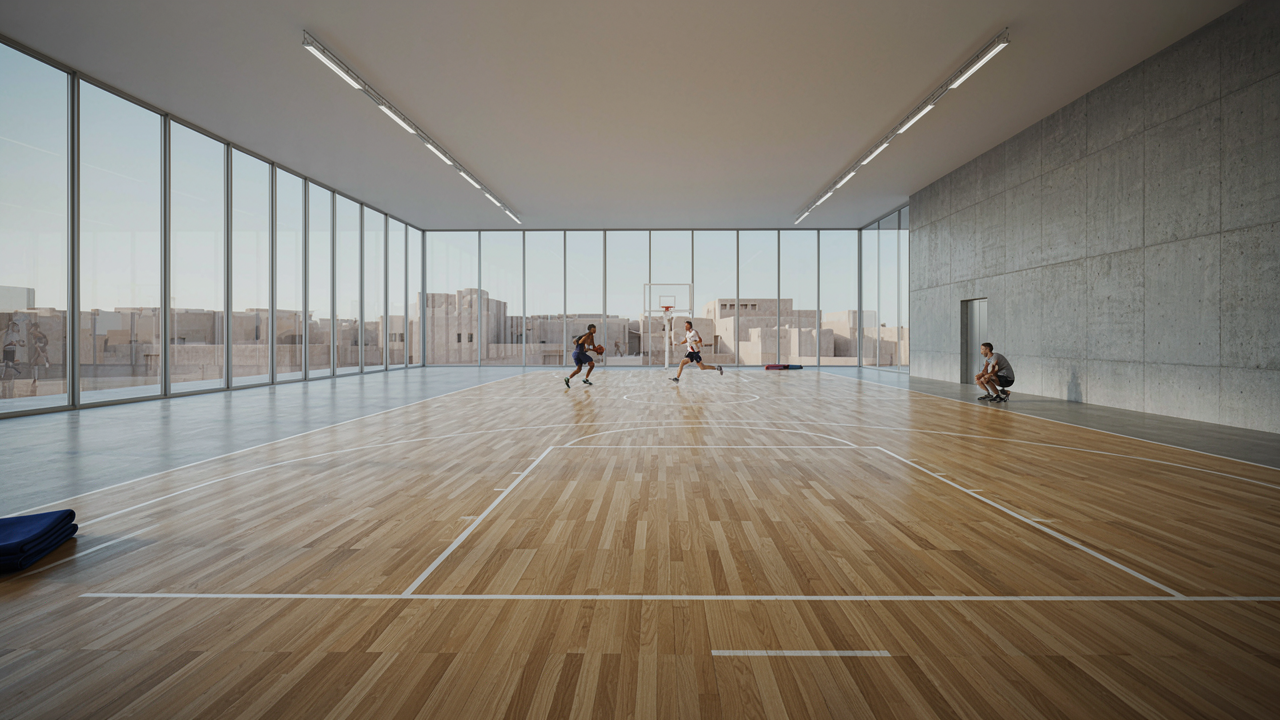
Wooden flooring is commonly associated with indoor sports halls and multipurpose activity spaces. It can also be considered for selected gym or studio environments where appearance and surface performance are important.
Wood flooring requires appropriate installation, protection and maintenance because the material can respond to changes in temperature and humidity.
It may be more suitable for activity areas such as group training, fitness studios or multipurpose spaces rather than heavy free-weight zones.
Acrylic Flooring
Acrylic flooring is primarily associated with outdoor courts and recreational sports surfaces rather than conventional indoor gyms.
However, it can be considered for outdoor fitness areas or sports facilities where a hard-wearing, weather-resistant surface is required.
Learn more about Acrylic Sports Flooring Installation UAE.
EPDM Sports Flooring
EPDM-based surfaces can be used in selected outdoor fitness and recreational areas where resilience, surface comfort and weather exposure are considerations.
They can be suitable for outdoor training zones, fitness tracks and activity areas depending on the design and performance requirements.
Our EPDM Sports Flooring Installation UAE guide explains the installation process in more detail.
Choosing Flooring Based on Gym Activities
The type of exercise carried out in a gym should be one of the first considerations when selecting a floor.
Weight Training Areas
Weight rooms need flooring that can withstand repeated
Choosing Flooring Based on Gym Activities
The type of exercise carried out in a gym should be one of the first considerations when selecting a floor.
Weight Training Areas
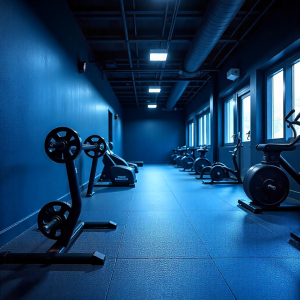
Weight rooms need flooring that can withstand repeated impact from equipment and weights.
Rubber flooring is often considered for these areas because of its durability and impact-resistant characteristics.
The floor thickness and installation method should be selected based on the equipment, weight loads and expected usage.
Cardio Areas
Treadmills, exercise bikes, cross trainers and other cardio equipment create continuous movement and foot traffic.
The flooring should provide adequate stability and should be easy to clean around equipment.
Surface durability is particularly important in busy commercial fitness centres where equipment may remain in use for many hours each day.
Functional Training Areas
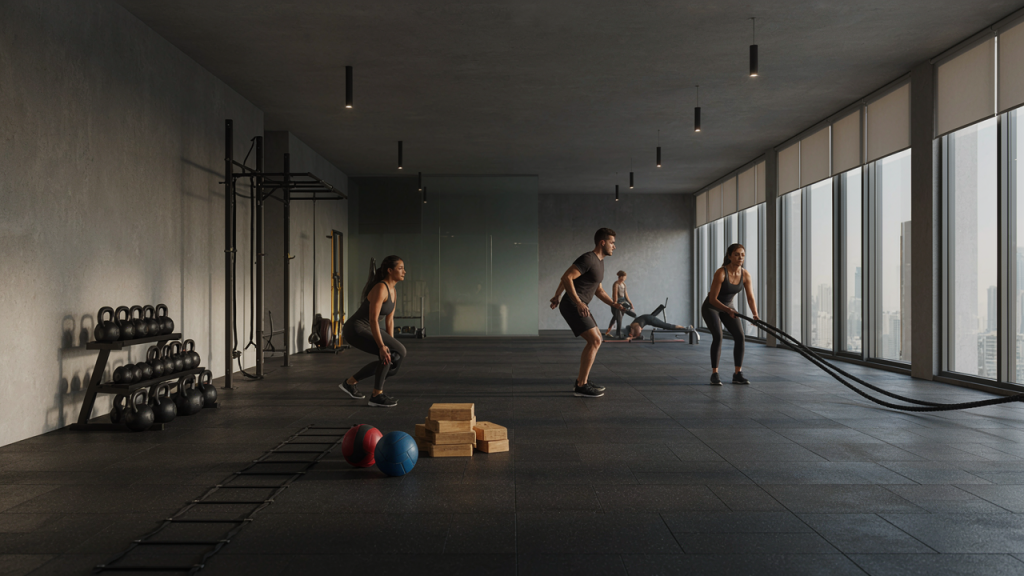
Functional training can involve jumping, running, stretching, agility exercises and equipment such as kettlebells and resistance tools.
A suitable surface should provide a balance between traction, durability and user comfort.
The flooring should also be installed evenly so that changes in surface level do not create unnecessary hazards.
Group Exercise Studios
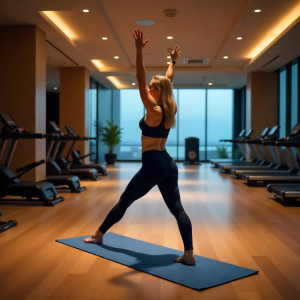
Yoga, aerobics, dance, circuit training and other group activities may require a different surface from a weight-training area.
Comfort, traction, cleaning and overall surface feel can become more important in these spaces.
For larger fitness centres, creating separate flooring zones can be a practical approach.
Key Factors to Consider in Gym Flooring
1. Durability
Commercial gyms can receive hundreds of users over time. Flooring should be capable of handling repeated traffic and the activities taking place on it.
Choosing a system based only on appearance may result in higher maintenance requirements later.
2. Impact Absorption
Activities involving jumping, dropped equipment or repeated movement can place significant stress on the floor.
Impact-absorbing flooring can help reduce stress on the surface and improve comfort in appropriate applications.
3. Traction
A gym floor should provide appropriate grip without making movement unnecessarily difficult.
The required level of traction depends on the activity. Training areas may have different requirements from stretching or studio areas.
4. Cleaning and Maintenance
Gyms require frequent cleaning because of high foot traffic and regular physical activity.
The flooring system should therefore have a practical cleaning and maintenance routine.
For more information, see our guide to Sports Flooring Maintenance UAE.
5. Installation Quality
Even high-quality flooring can perform poorly if the installation is not completed correctly.
The substrate needs to be inspected, cleaned and prepared before the flooring system is installed.
Our guide to Sports Flooring Surface Preparation UAE explains why this stage is important.
6. Indoor Environment
Most gyms are indoor spaces, but temperature, humidity and ventilation can still affect flooring performance.
The selected system should be compatible with the building conditions and intended use.
Flooring for Different Gym Zones
A large fitness facility does not always need one flooring system throughout the entire building.
For example:
| Gym Area | Flooring Consideration |
|---|---|
| Weight training | Impact resistance and durability |
| Cardio zone | Stability, durability and easy maintenance |
| Functional training | Traction, comfort and impact performance |
| Group studio | Comfort, grip and surface consistency |
| Stretching area | User comfort and smooth surface |
| Outdoor fitness area | Weather resistance and durability |
A zone-based flooring approach can help gym owners select surfaces according to actual usage instead of applying one solution everywhere.
Sports Flooring and UAE Climate
The UAE’s climate is an important consideration when planning sports and fitness facilities.
Indoor gyms are protected from direct outdoor exposure, but temperature and humidity conditions can still vary depending on the building’s ventilation and air-conditioning systems.
Outdoor fitness areas face additional challenges such as intense sunlight, high temperatures and dust.
For outdoor applications, the flooring system should be selected according to the environmental conditions and expected exposure.
Proper surface preparation and installation are also important for long-term performance.
Installation and Surface Preparation
Professional installation starts before the flooring material is placed.
The existing surface should be inspected for:
- Cracks
- Uneven areas
- Surface damage
- Moisture concerns
- Contamination
- Weak or loose sections
Any required repairs and preparation should be completed before the new flooring system is installed.
The installation method will then depend on the selected material and the requirements of the gym.
Proper preparation helps create a more consistent finished surface and can reduce problems associated with poor adhesion, unevenness or premature wear.
Maintaining Gym Flooring
Regular maintenance is essential in busy fitness facilities.
A basic maintenance programme may include:
- Regular dust and debris removal
- Routine cleaning
- Immediate cleaning of spills
- Inspection of damaged areas
- Checking high-traffic zones
- Following the flooring manufacturer’s cleaning recommendations
Gym equipment should also be moved carefully to avoid unnecessary damage to the flooring.
If cracks, lifting, worn areas or other damage appears, addressing the problem early can help prevent further deterioration.
For existing damaged surfaces, gym owners can also consider professional Sports Flooring Repair UAE solutions where appropriate.
When Should Gym Flooring Be Replaced?
The lifespan of gym flooring depends on the material, installation quality, traffic level, maintenance and environmental conditions.
Replacement may become necessary when the flooring has:
- Significant surface damage
- Persistent lifting or separation
- Severe wear
- Loss of required surface performance
- Extensive cracking
- Damage that cannot be effectively repaired
However, not every damaged floor needs complete replacement.
Depending on the condition of the existing surface, repair or resurfacing may be a more suitable option.
How to Choose the Right Gym Flooring in UAE
Before selecting a flooring system, gym owners should consider:
- What activities will take place on the floor?
- How much daily traffic will the facility receive?
- Will heavy weights or equipment be used?
- Is the area indoor or outdoor?
- What level of impact absorption is required?
- How frequently will the floor need cleaning?
- What maintenance programme can the facility follow?
- Does the existing substrate require repairs or preparation?
- What installation method is suitable for the selected material?
- What are the long-term repair and replacement requirements?
A professional site assessment can help answer these questions before installation begins.
Professional Sports Flooring for Gyms in the UAE
Selecting sports flooring for gyms in UAE is about more than choosing a material based on appearance or initial cost.
The right flooring should match the activities, traffic levels, equipment and environmental conditions of the facility. Rubber may be appropriate for heavy training zones, while other systems can be considered for studios, multipurpose areas or outdoor fitness spaces.
Proper surface preparation, professional installation and regular maintenance are equally important for long-term performance.
For gym owners, fitness centres and sports facilities planning a new floor or upgrading an existing one, evaluating the complete flooring system can help create a safer, more durable and practical training environment.
Frequently Asked Questions
What is the best flooring for a gym in the UAE?
The suitable flooring depends on the type of gym and activities. Weight training, cardio, functional training and group exercise areas can have different requirements.
Is rubber flooring suitable for gyms?
Rubber flooring can be suitable for many gym areas, particularly weight training, strength and functional training zones where durability and impact resistance are important.
Can different flooring types be used in one gym?
Yes. Large gyms can use different flooring systems in different zones based on the activities and equipment used in each area.
Does gym flooring require professional installation?
Professional installation is recommended for systems where substrate preparation, bonding, levelling or specialised installation techniques are required.
How often should gym flooring be maintained?
Cleaning and routine inspection should be carried out regularly, especially in busy commercial gyms. The exact maintenance schedule depends on the flooring material and facility usage.
Conclusion
The right gym flooring can influence safety, durability, comfort and maintenance requirements across a fitness facility. From rubber flooring for weight-training zones to specialised surfaces for studios and outdoor fitness areas, the flooring system should be selected according to how the space will actually be used.
For gyms and fitness centres in the UAE, considering the material, substrate, installation, climate, traffic and maintenance requirements together can help create a flooring solution that performs reliably over time.